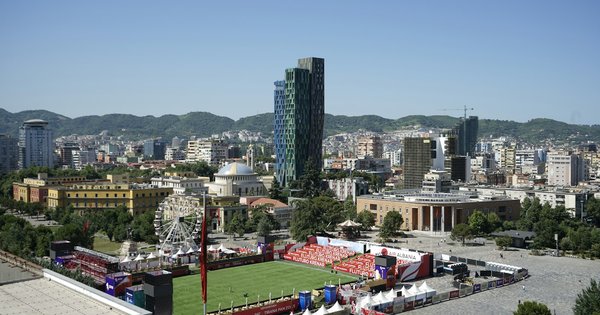
We’ve lived in Tirana on and off since 2022, and one thing that’s hard to explain to people back home is how much daily conversation here — in cafes, on the news, among the activists and organizers we’ve come to know — runs through the lens of the EU. Not in the abstract, “someday we’ll join Europe” way. In the specific, chapter-by-chapter, benchmark-by-benchmark way that most EU member states themselves never have to think about anymore. So when we saw the news out of Brussels on July 14, we paid attention the way locals here do: closely, and with a healthy amount of caution about what it actually changes.
What happened
On July 14, the ninth meeting of the EU–Albania Accession Conference provisionally closed three negotiating chapters: science and research (Chapter 25), education and culture (Chapter 26), and external relations (Chapter 30). It’s a genuine first — the first chapters Albania has managed to close since opening all 33 of its negotiating chapters. Thomas Byrne, Ireland’s Minister of State for European affairs, who represented the EU presidency at the conference, called it proof of “Albania’s and the EU’s commitment to continue the path of the country’s European integration,” while pushing Tirana to “stay the course on core reforms” in the months ahead.
That push was possible because of something that happened seven weeks earlier. At the previous Accession Conference on May 26, the EU confirmed Albania had met its interim benchmarks for Cluster 1 — the group of chapters known as Fundamentals, which covers the judiciary, anti-corruption work, public administration, and rule-of-law protections, including the chapter (23) that scores a country’s record on discrimination, hate crime, and minority rights. Meeting those interim benchmarks is what unlocked the ability to start closing any chapters at all — chapters 25, 26, and 30 just happened to be the first three ready.
Why Fundamentals is the chapter that actually matters here
Under the EU’s accession rules, Fundamentals is opened first and closed last. Progress on it sets the pace for everything else. Interim benchmarks are a real step — they’re what let Albania start closing other chapters — but they are not the same as closing benchmarks, and Chapter 23 itself, the one that scores LGBTQ+ rights specifically, remains open.
We wrote about this back in May, when the EU set closing benchmarks for Fundamentals: same-sex partnership recognition and a functioning legal gender-recognition process are still missing from Albanian law, and both are widely expected to be part of what Brussels is asking for before Chapter 23 can close for good. Three months later, neither has moved. Albania’s Family Code still defines marriage as between a man and a woman, and there’s still no legal pathway for a transgender Albanian to update their documents to match who they are. The gender equality law Parliament passed in late 2024 extended anti-discrimination protections to sexual orientation and gender identity on paper — a real, meaningful step — but the government’s own commitments on partnership recognition, made as part of Albania’s Universal Periodic Review process, remain unfulfilled.
Living inside the “meanwhile”
What’s striking, watching this from inside Tirana, is how normal the gap between paper commitments and lived reality feels here. Albania genuinely does have one of the stronger legal frameworks in the Western Balkans on LGBTQ+ discrimination — ILGA-Europe’s Rainbow Map consistently ranks it near the top of the region. Xheni Karaj and the other activists who’ve spent two decades building that framework, chapter by chapter, deserve real credit for it. And EU accession, whatever its frustrations, has been the single most effective lever for turning activist demands into actual law here — Brussels asking for something tends to move faster than domestic politics alone ever would.
But the EU’s own timeline reflects how far the harder pieces still have to go. Enlargement Commissioner Marta Kos has floated 2029 as a realistic completion date; Prime Minister Edi Rama keeps pushing for 2027 or 2028. Either way, the specific reforms that would change the legal status of same-sex couples and transgender residents here aren’t on a fast track — they’re sitting inside the one cluster that isn’t finished yet, in a process that, by design, saves the hardest chapter for last.
We don’t think that’s a reason for cynicism about the July 14 news. Three closed chapters is real progress, and every closed chapter narrows the list of things left to negotiate. It’s just a reminder that the headline “Albania moves forward in EU accession” and the headline “Albania recognizes same-sex partnerships” are, for now, two different stories — and the second one is still being written.