For years, “recognize same-sex partnerships” sat on Albania’s EU integration roadmap the way a New Year’s resolution sits on a fridge door — acknowledged, agreed to in principle, and quietly ignored. The government’s own roadmap called for some form of civil union law by the end of 2025. That deadline came and went with nothing to show for it. What changed this spring is that Brussels stopped treating the item as aspirational and started treating it as a gate.
What actually happened
At the Eighth Intergovernmental Conference on Albania’s accession, held on May 26, the EU set closing benchmarks for Cluster 1 — the “Fundamentals” chapter that covers rule of law, human rights, and, crucially for our community, protection from discrimination. Same-sex partnership recognition and a legal gender-recognition procedure were both named among the pieces still missing, and both are now attached to a timeline rather than left open-ended.
The distinction matters more than it might sound. An opening benchmark is a door you have to walk through to begin negotiating a chapter. A closing benchmark is the condition you have to satisfy to finish it. Cluster 1 is the chapter everything else in the accession process is now scored against — the EU restructured its enlargement methodology specifically so that the “fundamentals” get opened first and closed last. Albania is targeting 2028 for membership. If partnership recognition and gender recognition are closing benchmarks for Cluster 1, then in practical terms they have become preconditions for the entire accession Albania’s government has staked its legitimacy on.
Why Albania, of all places
If you only know the Balkans through headlines, Albania passing progressive LGBTQ+ law might read as surprising. It shouldn’t. Albania decriminalized same-sex activity back in 1995, has comprehensive anti-discrimination legislation, and is the only country in the region with even a partial ban on conversion practices. Earlier this year — over weeks of loud opposition — it adopted an inclusive Law on Gender Equality. On paper, Albania is one of the more protective environments in Southeast Europe.
The gap has always been between paper and household. Anti-discrimination law does not help a same-sex couple who cannot inherit from each other, make medical decisions for each other, or hold any legal relationship the state will acknowledge. There is no partnership framework of any kind, and no route for a trans person to change their legal gender marker. Those are exactly the two boxes Brussels has now flagged.
The honest complication
We want to be clear-eyed about this, because it’s our home. EU conditionality is a real lever, and it has genuinely moved rights across the accession-hungry Balkans — but a right handed down as a bureaucratic checkbox is not the same as a right a society has decided it wants. There is a version of the next two years where Albania’s government passes a thin cohabitation statute, calls it a civil union, checks the box, and the underlying hostility that made the gender-equality bill a national fight goes nowhere. Montenegro’s civil partnership law — still the only same-sex partnership framework operating in the Western Balkans — has shown both the promise and the limits of legislating ahead of public opinion.
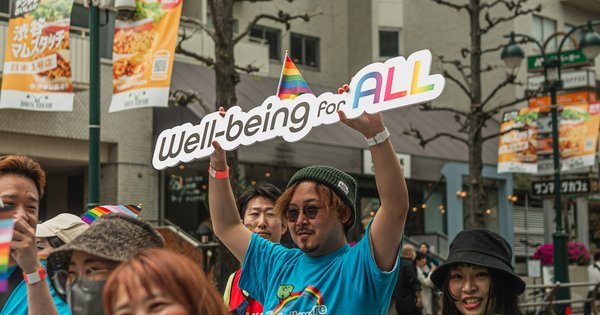
And conditionality cuts the other way too. Anti-gender movements across the region have learned to frame LGBTQ+ rights as something imposed from outside, a foreign price extracted for EU membership rather than a domestic matter of dignity. A benchmark handed down from Brussels is easy to caricature that way. The activists doing the real work here know this, which is why so much of the organizing around Tirana Pride has centered on family, belonging, and the plainly local argument that queer Albanians are Albanians.
What we’ll be watching
The government now has a concrete incentive it did not have in December, when it let its own deadline lapse. The questions for the rest of 2026 are whether a partnership bill actually gets drafted, whether it offers real protections or a hollow substitute, and whether a gender-recognition procedure appears alongside it or gets quietly dropped as the harder political lift. There is also the separate roadmap commitment to pass anti-LGBT hate crime and hate speech legislation this year, which has its own case to make regardless of what happens with partnerships.
For once, the calendar is working in the community’s favor. A deadline you set for yourself is easy to miss. A deadline attached to the thing your entire government wants most is a different kind of pressure. We’ll be here to see which way it breaks.
Sources: Recognition of same-sex unions in Albania — Wikipedia, European Parliament LGBTIQ+ Intergroup — Albania, Outright International — Albania.