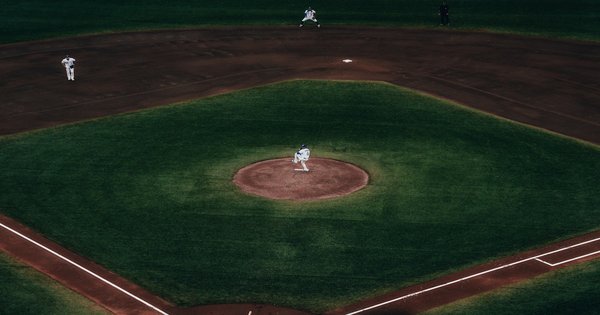
Not every LGBTQ+ story this year is a court ruling or a ballot fight. Some of them are just joyful, and this is one of them. This August, the Women’s Pro Baseball League takes the field for its inaugural season — the first women’s professional baseball league in the United States since the All-American Girls Professional Baseball League folded in 1954. That is 52 years without a professional home for women who play the game. And when the WPBL finally debuts, a strikingly large share of its players will be openly queer.
A league 52 years in the making
The WPBL launches with four teams — Boston, New York, San Francisco, and Los Angeles — and a lineage that runs straight back to the league immortalized in A League of Their Own. For generations, girls who wanted to keep playing baseball rather than being funneled into softball had nowhere to go once they aged out of youth leagues. The WPBL is the first serious attempt in more than half a century to build that ladder, with real contracts, real teams, and a real season.
That history matters, because women’s baseball and queer women’s history have always been quietly intertwined. The original 1940s league had its own community of gay players who could never say so out loud. The 2026 version does not have to whisper.
Meet some of the players
The out talent on the inaugural rosters is not hidden in the margins — it includes some of the league’s marquee names.
Kelsie Whitmore, the first overall pick in the WPBL Draft, is one of the most recognizable women in baseball, having played for the Savannah Bananas and several men’s independent-league teams before this. Amanda Gianelloni became the very first woman to sign with the league and is married to her wife, a fellow New Orleans native. Canadian left-handed pitcher Liz Gilder has represented Team Canada since she was seventeen and is an outspoken advocate for LGBTQ+ athletes. Ashton Lansdell, a former Team USA gold medalist, has been openly queer and vocal about women’s baseball throughout her career. And Micaela Minner — who has acted in A League of Their Own and Drive-Away Dolls — lives in Akron, Ohio, with her wife and business partner.
By the counts of several LGBTQ+ outlets that have gone through the rosters, roughly a third of the league’s players are out. In a professional sports landscape where a single openly gay man on a major roster still makes headlines, that number is not just notable — it is a different model of what a league can be from day one.
Why representation like this lands differently
There is a particular kind of power in a league that is queer from its founding rather than one that slowly, grudgingly makes room. Nobody in the WPBL is breaking a barrier by coming out mid-career under a bank of cameras. The barrier was never built. Players arrived out, signed out, and will play out, in front of families and kids in the stands who get to see it treated as ordinary.
For young queer athletes, that ordinariness is the whole point. Visibility studies and the lived experience of every LGBTQ+ person who grew up without role models tell the same story: it is hard to imagine a future you have never seen. A twelve-year-old who loves baseball and is starting to understand she is gay can now watch professional women who share both of those things and play like it is the most natural combination in the world — because for them, it is.
A bright spot worth naming
We spend a lot of time on this site covering hard news, and 2026 has handed us plenty of it, in the US and across Europe. So it feels important to stop and mark the good. In a year when trans athletes in particular have faced bans, court fights, and relentless political targeting in the United States, the arrival of a joyfully, openly queer professional league is a reminder of the other truth about LGBTQ+ people in sport: we have always been here, we are very good at the games we love, and given the chance to play as ourselves, we show up in numbers. The WPBL’s first pitch this August is worth watching — not despite who its players are, but because of it.