We’ve spent a big chunk of the last four years based in the Balkans — Tirana is home for a good part of every year — and one thing we’ve learned is that the story of LGBTQ+ rights here rarely fits the headlines people expect. It’s neither the unrelenting darkness that some Western coverage assumes, nor a smooth march toward equality. It’s uneven, country by country, and it moves in ways that only really make sense if you’re paying attention up close. Now that we’re halfway through 2026 and Pride season across the region has wrapped, it feels like a good moment to take stock.
The Rainbow Map told a mixed story
ILGA-Europe’s 2026 Rainbow Map, released in May, is the clearest single snapshot we have of where each country’s laws stand. The Balkans, predictably, landed in the middle and lower reaches of the 49-country ranking — but the details matter more than the raw numbers.
Serbia scored around 34%, ranking 29th, and notably slipped from its position two years earlier. That decline is worth sitting with: Serbia has long branded itself as the regional frontrunner, with a lesbian prime minister for years and a Belgrade Pride that runs annually. But a march that happens and a government that actually delivers legal protections are two different things, and the stalled same-sex partnership law is the clearest example of promises that never became statute.
Albania, where we spend the most time, keeps quietly outperforming its reputation. It’s the only country in the region with a partial conversion-therapy ban and genuinely comprehensive anti-discrimination legislation. What it still lacks is just as telling: no recognition of same-sex partnerships, no legal path for same-sex parenthood, and no gender-recognition framework for trans people. Progress on the page, big gaps in the law.
Montenegro remains the regional outlier in one important respect — it’s still the only Western Balkan country with a functioning civil-partnership framework, now more than six years old. That single law does a lot of heavy lifting in the rankings and, more importantly, in real people’s lives.
Pride season: the temperature check that matters
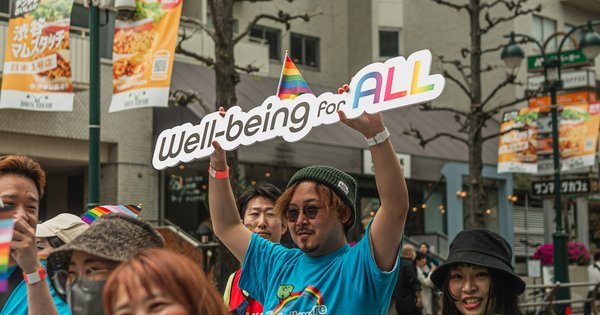
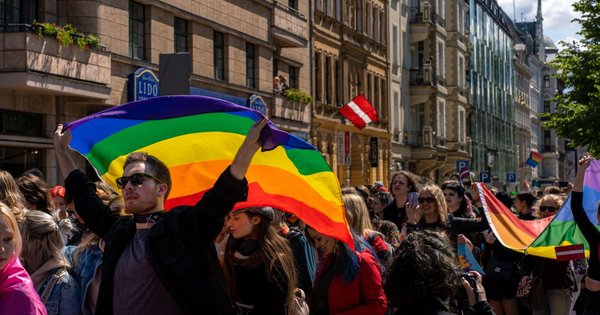
Laws tell you one thing; whether people can gather safely in public tells you another. This year’s Pride season was, on balance, a cautiously encouraging one. Marches went ahead in Skopje and Sarajevo in June, Belgrade’s community kept organizing under difficult political conditions, and Tirana Pride in May marched under the banner “Together for Family,” pushing the conversation toward recognition of same-sex families.
The pattern we keep seeing is that Pride in the Balkans still requires heavy police protection and careful planning in a way it simply doesn’t in Madrid or Amsterdam. A few hundred marchers here can represent as much courage as a hundred thousand elsewhere. But they keep happening, year after year, and each one normalizes the idea a little more that queer people are part of public life, not a threat to it.
EU accession is the quiet engine
If there’s one force reshaping LGBTQ+ rights across the region, it’s the EU accession process. For countries like Albania, Serbia, North Macedonia, and Montenegro, the path to membership comes with rule-of-law and human-rights benchmarks that increasingly touch on anti-discrimination protections and the treatment of minorities, including LGBTQ+ people.
This is where the leverage lives. Domestic politicians who might never champion queer rights on their own terms will sometimes move on them to keep an accession chapter on track. It’s not a pure or particularly romantic mechanism for change — it’s rights advancing as a side effect of geopolitics — but it’s real, and in Albania especially we’ve watched EU-related pressure keep certain reforms on the agenda that would otherwise have quietly died.
The flip side is that accession can stall, and enthusiasm for it can cool, which makes the whole thing fragile. Rights secured mainly as accession currency can feel provisional in a way that rights won through genuine domestic consensus don’t.
What we’re watching for the rest of the year
Three things, mainly. Whether Serbia’s long-promised partnership law shows any real sign of life, or stays permanently on the shelf. Whether Montenegro’s civil-partnership framework inspires a neighbor to finally follow its lead — six years on, it’s frustrating that it remains the region’s only one. And whether the fall Pride events, including Montenegro’s, pass off safely and grow.
From where we sit, the honest summary is this: the Balkans are neither the worst place to be queer nor an easy one, and the gap between what’s written in law and what’s lived on the street remains wide almost everywhere. But the direction of travel, halfway through 2026, is more forward than back — and in this part of Europe, that counts as good news.
Sources: ILGA-Europe Annual Review 2026, Balkan Insight, Osservatorio Balcani Caucaso Transeuropa, New Lines Institute.