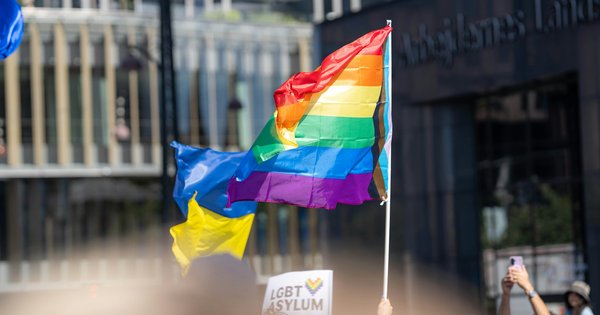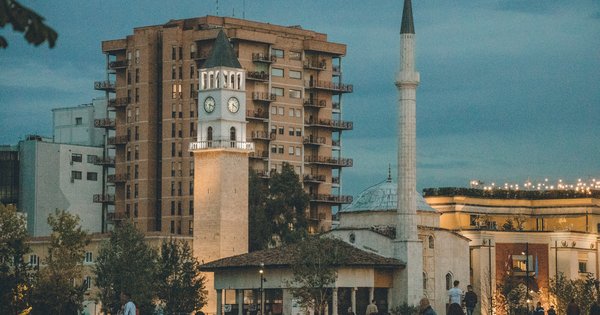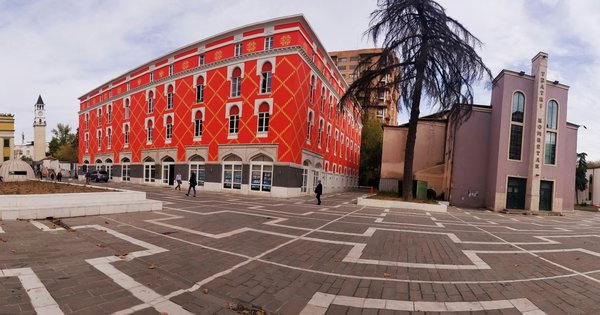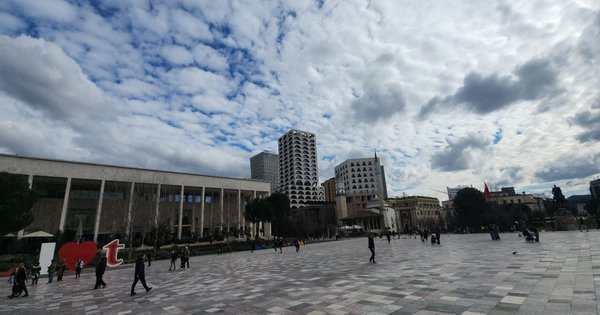
Every July the queer internet points itself somewhere else. This year it is Amsterdam, where WorldPride kicks off on July 25 and the whole continent’s rainbow gravity is bending toward the canals. We’ll be paying attention from a distance, because this summer — like most of our summers lately — we are in Tirana. And after enough time here, we’ve come to think the ordinary weeks are worth writing about too. Not the parade. The Tuesday.
The city empties out, in a good way
By mid-July, Tirana has that particular emptied-out summer feeling that Mediterranean-adjacent cities get. A lot of Albanians decamp to the coast — Sarandë, Durrës, Vlorë — and the capital loosens its collar. Traffic thins. The cafés spill further onto the sidewalks. The heat sits heavy by early afternoon, so the city reorganizes itself around the edges of the day: slow mornings, a long dead zone when the sun is at its worst, and then everything coming back to life around six or seven.
We’ve learned to live on that rhythm. It is genuinely one of the things we love about being here in summer. Nobody expects you to accomplish anything between two and five. You work in the morning, you disappear during the heat, and you re-emerge into an evening that stretches on forever.
Blloku after dark
Blloku is still the center of gravity for us. Once the sealed-off neighborhood reserved for Communist Party elites, it is now the most densely caffeinated, best-dressed square kilometer in the country, and in July the whole thing runs on outdoor tables. We are not going to overstate things and tell you Tirana has some sprawling gay district — it does not. Albania remains a place where public queerness is read carefully, and two men reading the room before deciding how to sit is still part of the calculus here.
But what Blloku offers is something quieter and, honestly, kind of lovely: a set of cafés and bars where we have never once felt unwelcome, where the staff know our coffee order, where the crowd skews young and cosmopolitan and far more relaxed about who’s holding whose hand than the country’s politics might lead you to expect. The gap between official Albania and everyday Tirana is real, and in the summer, with everyone out late on the terraces, everyday Tirana wins.
The community keeps its own calendar
One thing outsiders miss: the Albanian queer community’s year does not end when Pride does. Tirana Pride happened earlier in the season, and the anti-gender backlash that followed it — including debate over a school-content bill — was a reminder that visibility here still carries a cost. But the organizations that do the real work, like Streha and Aleanca, don’t operate on a festival schedule. Streha, the region’s shelter for LGBTQ+ young people who’ve been rejected by their families, runs all twelve months. The summer, when a lot of international attention drifts elsewhere, is exactly when local mutual aid matters most.
We mention this because it is easy, as travelers, to show up for the party and leave before the work. If you find yourself in a Balkan city and you want to actually do something, the answer is almost always the same: find the local organization, ask what they need, and give money rather than opinions.
Why we keep coming back
People ask us, reasonably, why a married gay couple who could base themselves anywhere in Europe keeps returning to a country that does not recognize our marriage and has no civil-union framework. The honest answer is layered. Part of it is practical — Albania sits outside the Schengen zone, which resets our clock and gives us breathing room from the ninety-in-one-eighty math that governs so much of nomad life. Part of it is cost. Part of it is that Tirana, improbably, has become a place we are fond of.
But part of it is that we think the interesting story in queer Europe right now is not in the capitals that already figured it out. It is in places like this — mid-accession, mid-argument, genuinely uncertain which way the next decade breaks. Being here in the ordinary weeks, not just for Pride, is how we try to see that story clearly. WorldPride will be spectacular, and we’re glad it exists. But there’s something to be said for the un-spectacular version of queer life: a July evening in Blloku, a cold Korça beer sweating on the table, and a city that, for a few hours after sundown, feels entirely like home.