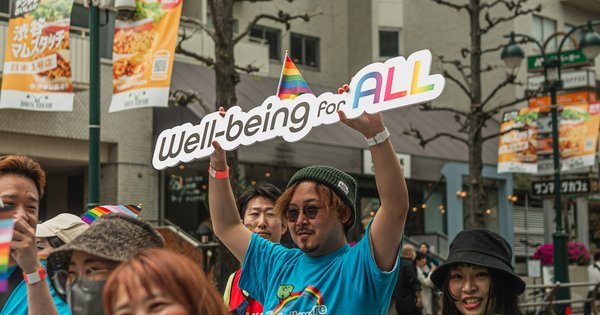
Governor Abigail Spanberger spent Saturday afternoon at Virginia PrideFest in Richmond, among thousands of people on the Midtown Green at what is comfortably the Commonwealth’s largest queer gathering of the year. Toward the end of her remarks she told the crowd something none of them knew: the Youngkin-era rulemaking that would have barred transgender women and girls from women’s bathrooms, locker rooms and sports teams across Virginia was already dead, and had been for weeks.
According to Virginia’s Regulatory Town Hall, the regulatory action was formally withdrawn on 30 July 2026. Saturday was 12 September. Those two dates are not a bookkeeping detail — they are the shape of how this decision was made.
What the rulemaking would have done
The proposal came out of the final stretch of Glenn Youngkin’s administration and took an unusual route. Rather than legislation, which would have had to pass a General Assembly that was not going to pass it, the vehicle was the Virginia Board of Health — a regulatory body with the power to write rules that carry legal force without a floor vote.
The process was triggered by a citizen petition from three anti-trans activists, Réka György, Lily Mullens and Carter Satterfield, who asked the state to act against what their filing described as “males claiming or pretending to be females and gaining access to female-only athletic competitions and private spaces.” A petition of that kind obliges the relevant board to respond; the Youngkin administration’s response was to open a rulemaking.
Had it been completed, the rule would have used the Board of Health’s authority over public facilities to restrict access to women’s-only athletic teams and competitions, bathrooms, locker rooms, and other spaces where people may be undressed. In practice that would have covered a very large share of school and public facilities in Virginia, and it would have been enforceable regardless of what any individual school district preferred.
Why the timing matters
Spanberger’s explanation for killing it was legal rather than political. “There’s no legal authority to move forward with rulemaking,” she said on Saturday, “and prior administrations may have tried to create lanes and we’re not doing that.”
That is a defensible reading — the Board of Health’s statutory remit does not obviously extend to policing who uses which changing room — and it is also the safest possible framing. It positions the decision as a lawyer’s conclusion rather than a values statement, which makes it considerably harder to run an attack ad against.
People close to the process say the governor deliberately kept the withdrawal quiet through the rest of the summer, to avoid opening up additional fights on the subject. Virginia is in the middle of a midterm cycle in which anti-trans advertising has been one of the Republican Party’s central investments, and a July press release would have handed opponents six extra weeks of material.
It is worth being straightforward about what that means. Trans Virginians and their families were, for seven weeks, unaware that a regulatory threat hanging over them had been removed. Families weighing whether to stay in the state, or whether a child could join a team in the autumn, were making those decisions without information the administration already had. That is a real cost, and it was paid by the people the decision protected.
It is also, on the evidence, a calculation that worked. The rule is gone, and it went without becoming a campaign issue.
The reaction, and the argument behind it
State Senator Danica Roem, the first out trans person elected and seated in any US state legislature, welcomed the withdrawal on Bluesky, describing Youngkin’s policy as an attempt “to single out & stigmatize trans constituents.”
Tyler Hack, executive director of the Christopher Street Project — which backs candidates who support trans rights — framed Spanberger’s record as a direct argument against the strategic drift now visible among some Democrats. “Spanberger showed how Democrats win amidst Republican attacks,” Hack said. “She went live on the air, answered them head-on, explained that she will fight for the safety of every child, and refused to let Republicans define the conversation.” Hack’s point is that she “neutralized the attacks” rather than conceding the ground.
There is evidence behind that claim. Last September alone, her Republican opponent spent around $2 million on anti-trans advertising in the governor’s race. Spanberger won anyway, and polling during the campaign showed her holding a double-digit advantage on trans-related questions specifically.
That is a live dispute inside the Democratic Party right now. Candidates in Texas, Ohio and Iowa have started publicly distancing themselves from trans rights on the theory that the issue is a liability, even though such defections remain a small minority of Democratic candidates nationally. Virginia is the counter-example most often cited by people arguing the opposite — a purple state, a moderate candidate, a saturation-level opposition ad campaign, and a win.
What is still on the books
Killing the rulemaking removes a threat; it does not undo what already exists. Youngkin’s 2023 model policies on transgender students — which direct school divisions to use names and pronouns matching a student’s sex assigned at birth unless a parent requests otherwise in writing, and to assign bathrooms and locker rooms on the same basis — remain in place and would need separate action to repeal or revise.
The Virginia High School League’s eligibility rules for transgender athletes were also changed under federal pressure earlier this year, and the VHSL is a private membership organisation rather than a state agency, which puts it outside the governor’s direct authority.
Advocates in the state have been explicit that they see Saturday as a first step rather than a conclusion. Kellen MacBeth of Equality Arlington, who also sits on Virginia’s LGBTQ advisory board, said the community needs to see officials “working to protect their right to exist in a hostile world,” and pointed specifically to the model policies and school sports as the next targets.
The General Assembly returns in January. That is when the question shifts from what a governor can withdraw to what a legislature will pass.