There is a particular irony in the fact that Northern Ireland — the part of the UK where LGBTQ+ people have had to wait longest for almost everything — may be the first jurisdiction on these islands to ban conversion practices.
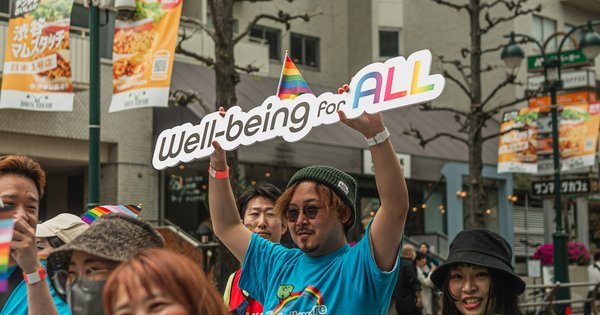
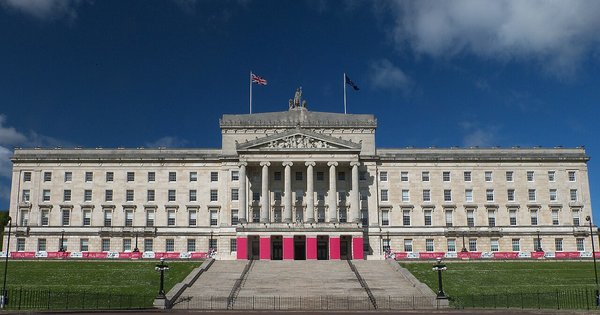
MLAs debated the Second Stage of the Conversion Practices (Criminalisation) Bill at Stormont this morning. It is a private member’s bill introduced by Eóin Tennyson, the Alliance Party’s deputy leader and MLA for Upper Bann, and it would criminalise practices intended to change or suppress a person’s sexual orientation or gender identity, with penalties of up to two years’ imprisonment. From 10am, campaigners stood on the steps outside Parliament Buildings with placards. The debate began around 11am and the vote on the bill’s general principles — whether it proceeds to committee stage for detailed scrutiny — was expected in the early afternoon.
What the letter says, and who signed it
Ahead of the debate, the Ban Conversion Practices Coalition published an open letter to every MLA, urging them to take what it called a historic opportunity. Twenty-one organisations signed it, and the range is the point.
There are the LGBTQ+ organisations you would expect: The Rainbow Project, HEReNI, Cara-Friend. There are human rights bodies — Amnesty International UK, the Human Rights Consortium, Participation and the Practice of Rights. There are women’s organisations: Reclaim the Agenda, the Northern Ireland Rural Women’s Network, the Women’s Resource and Development Agency, the NI Women’s Budget Group, Alliance for Choice, ROSA Socialist Feminists. There is a faith group, Christians at Pride NI, and a youth organisation, YouthAction NI. And there is the trade union movement in force: NIPSA, the Northern Ireland Committee of the Irish Congress of Trade Unions, Belfast and District Trades Union Council, and the University and College Union.
Coalitions in Northern Ireland that stretch across the labour movement, the women’s sector, human rights groups and a Christian organisation are not assembled casually. They are assembled when campaigners have decided a vote is genuinely winnable and want it on record who was where.
Northern Ireland Humanists, part of Humanists UK and also a signatory, was among those outside Stormont this morning. Its coordinator Boyd Sleator put the case for a Second Stage vote in deliberately modest terms: “This vote is about accepting the principle that people should be protected from these practices and allowing the Bill to proceed to detailed scrutiny.” That framing matters, because Second Stage is not final passage. It is the Assembly agreeing that the problem is real enough to examine.
What conversion practices are
The term covers a range of interventions united by a single premise — that a person’s sexual orientation or gender identity is a defect to be corrected. In practice that has meant pseudo-psychological counselling, coercive talking therapies, forced prayer and exorcism, and sustained pressure applied most often to young people and to people who are dependent on the person applying it.
Every major professional body in UK healthcare has repudiated these practices. There is no clinical evidence that they change anything about a person’s orientation or identity, and considerable evidence that they cause lasting harm. Tennyson opened the debate by reading testimony from people who had been subjected to them, and became emotional doing so.
The objections, and where they land
Unionist MLAs opposed the bill during the debate, arguing it risks restricting freedom of expression. Ulster Unionist leader Jon Burrows warned it could criminalise parents offering advice to their children, and said mothers and fathers might feel obliged to record conversations with their own children in case those conversations ended up in court. Others noted that coercive behaviour and abuse are already criminal offences.
These arguments are familiar from every jurisdiction that has legislated. They also point at the genuinely hard drafting problem, which is where a bill draws the line between a practice with a predetermined purpose to change someone and an ordinary conversation between a parent and a child, or a therapist and a patient who has come with their own questions. The definition in the bill is the thing committee stage exists to test — and testing it is the whole argument for letting it proceed.
The point about existing offences is weaker than it sounds. Coercive control and assault are indeed crimes, but the specific harm here is a course of conduct undertaken with the stated aim of eliminating something about a person that is not a disorder, frequently conducted with the participant’s nominal consent and often in settings where consent is not meaningfully free. That is exactly the gap a targeted offence is meant to close.
Why “first on these islands” is a real claim
The coalition’s phrasing is careful, and it holds up.
Westminster has been promising a UK-wide ban since 2018. Successive governments announced it, delayed it, narrowed it to exclude gender identity, restored it, dropped it and reannounced it. A draft Conversion Practices Bill for England and Wales was finally published in June this year and considered in the Commons, but it remains a draft in pre-legislative scrutiny rather than an enacted law. The Republic of Ireland has debated the question repeatedly without legislating. Northern Ireland’s own Assembly passed a symbolic motion supporting a ban in June 2024, which committed no one to anything.
So a Stormont bill is not a regional supplement to a national ban. It is the furthest along anything has got.
There is an additional reason it matters here specifically. Northern Ireland reached marriage equality in 2020 only through Westminster legislation passed while the Assembly was suspended, and decriminalised abortion by the same route. LGBTQ+ people in Northern Ireland have grown accustomed to their rights arriving from elsewhere, over the heads of their own legislature. A bill passed at Stormont, by MLAs, would be a different kind of thing entirely — not a right conferred, but one legislated for at home.
What happens next
If the bill clears Second Stage, it goes to committee, where the definition of a conversion practice, the question of religious exemptions and the treatment of consent will all be argued line by line. The coalition’s position, and Northern Ireland Humanists’ in particular, has been consistent: no carve-outs for religious practices or religious settings, on the grounds that a great deal of conversion practice happens in exactly those settings.
That fight is the one that will decide whether the eventual law means anything. But it is a fight that only happens if the bill survives today, and the twenty-one organisations who signed this morning’s letter were writing to make sure MLAs understood which of those two things was actually on the ballot.