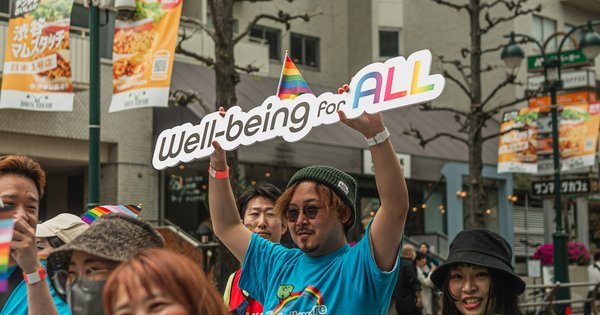
Human Rights Watch published a report on July 7 documenting a sharp rise in harassment and attacks against lesbian, gay, bisexual, and transgender university students in Indonesia during June 2026 Pride Month celebrations. The findings point to a troubling pattern: the institutions that should protect students are increasingly the ones targeting them.
According to the report, at least 10 public universities have recently adopted discriminatory regulations while curbing student media coverage and social media discussion of gender and sexual diversity — a direct hit to freedom of expression on campuses that are meant to be spaces for open inquiry.
“Indonesian authorities are looking the other way during an upsurge of attacks on LGBT university students and others,” said Meenakshi Ganguly, deputy Asia director at Human Rights Watch. “Indonesia’s universities are contributing to the problem by discriminating against students on the basis of gender identity and sexual orientation.”
What happened on campus
The incidents Human Rights Watch documented are specific and recent. In June, members of Suara Mahasiswa (Student Voice), the student news outlet at Universitas Indonesia, faced intimidation, doxxing, and stalking after a June 10 article highlighting human rights violations against LGBT people on campus. Rather than protecting the journalists, university officials summoned the editor-in-chief and publisher and urged them to remove the content, citing concerns about campus “security” and “reputation.”
On June 2, a same-sex couple found kissing in the library of the Jakarta State Polytechnic in Depok, West Java, were jeered and harassed; authorities said one of the students would be punished. In May, staff at Padang State University in West Sumatra expelled a student suspected of being gay after a video circulated online, declaring the university would not tolerate “sexual deviation.”
Arus Pelangi, Indonesia’s LGBT umbrella organization, documented 94 cases of violence targeting LGBT individuals — involving 141 victims — across 2024 and 2025. “Patterns of hate based on gender identity and sexual orientation have been built year after year,” the group’s chairperson, Nono Sugiono, told Human Rights Watch.
A legal environment that enables the abuse
The campus incidents are not happening in a vacuum. In response to Pride Month, the influential Indonesian Ulema Council declared that “sexual deviation” should carry criminal penalties heavier than adultery, and drafted a law to criminalize anyone campaigning for LGBT rights.
There is also pressure from the very top. In October 2025, President Prabowo Subianto signed a national defense decree that framed “the spread of LGBT culture” as a non-military threat to national security and urged parents to monitor their children for “this lifestyle.” The decree was only made public in early July 2026.
Indonesia maintains at least six national laws and regulations that discriminate on the basis of sexual orientation or gender identity, and more than 45 anti-LGBT regional regulations are in effect across the country. Of particular concern is Indonesia’s new criminal code, which came into force in January 2026 and further stigmatizes LGBT people. While the code does not explicitly criminalize same-sex relations nationwide, its provisions on morality and “obscenity” give officials wide latitude, and its arrival has coincided with the escalation Human Rights Watch describes.
Why this matters beyond Indonesia
Indonesia is a party to the International Covenant on Civil and Political Rights, which prohibits discrimination — including on the basis of sexual orientation. The gap between those commitments and what is happening on Indonesian campuses is exactly the kind of story that gets lost when coverage stays fixed on Washington or Brussels.
For the roughly 280 million people who call Indonesia home, this is the largest democracy in Southeast Asia moving in the wrong direction on a fundamental question of who gets to exist openly. Human Rights Watch’s recommendations are straightforward: university administrators should protect academic freedom and freedom of expression rather than punish the students exercising it, and the government should review and revise the laws that facilitate these attacks.
“University administrators should be the first line of defense against anti-LGBT discrimination that harms students,” Ganguly said, “and the Prabowo government needs to recognize the role it should be playing to ensure that everyone’s rights are respected, irrespective of sexual orientation or gender identity.”
It is a low bar — protect your own students — and right now, Human Rights Watch says, too many of Indonesia’s universities are failing to clear it.
Source: Human Rights Watch, “Indonesia: Surge in Abuse Against LGBT Students,” July 7, 2026.