Some years the big LGBTI conference of the autumn is a victory lap. This is not one of those years.
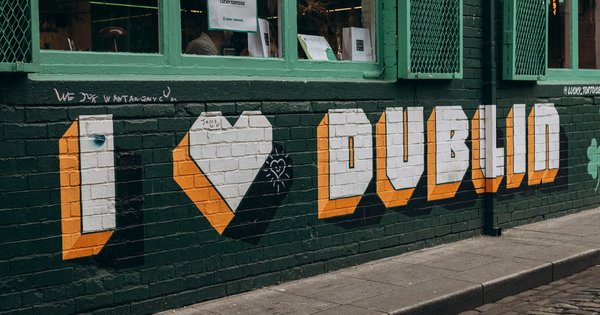
From today until Sunday, October 11, more than 400 activists from across Europe and Central Asia are in Dublin for the ILGA-Europe Annual Conference 2026, the largest yearly gathering of the region’s LGBTI movement. It lands in the organisation’s 30th year, and at a moment when, in ILGA-Europe’s own words, pressure is rising and spaces are shrinking.
The theme is Resist and Rise. Here’s what that means, why Dublin, and what’s on the table.
Two words, two jobs
The conference is built around two “horizons,” according to ILGA-Europe:
- Holding the line: responding to the current backlash, defending rights that already exist and staying visible as civic space shrinks.
- Shaping what comes next: laying foundations for breakthroughs 10 to 20 years from now.
The organisers describe the second part plainly: “This is patient, generative work. It is about putting in place the relationships, strategies, and structures that will allow us to move fast and together when the moment shifts.”
It’s a useful frame for anyone who has spent 2026 doom-scrolling. Defending what you have and planning for what you want are not competing priorities. They’re the same movement working on two clocks.
Why Dublin, and why the Irish phrase matters
The local hosts are Outhouse LGBTQ+ Centre and LGBT Ireland. Dublin was announced as the 2026 host at last year’s conference in Vilnius, on October 30, 2025, GCN reported.
“Outhouse is thrilled to co-host this key gathering with LGBT Ireland,” Outhouse CEO Oisín O’Reilly told GCN at the time. “It’s a chance to showcase the progress we’ve made, to stand in solidarity with those facing hostility across Europe and Central Asia.”
ILGA-Europe’s executive director, Chaber, put Ireland’s role this way: “Ireland’s story reminds us how vision, collaboration, and the belief that change is in our hands can transform both law and society.”
The theme has an Irish version too: Seasamh is Éirigh. ILGA-Europe explains that seasamh carries the sense of taking a stand, standing firm and coming together, and éirigh means to rise or emerge with renewed strength. O’Reilly provided the translation; the typographic logo is by the designer Redman AKA.
Thirty years of ILGA-Europe
ILGA-Europe turns 30 this year, and marked it with a birthday fundraiser in Brussels on June 3. “Thirty years of progress is worth celebrating. It is also worth defending,” the invitation read. Three decades on, the organisation’s two flagship reports for 2026 show why the mood in Dublin is determined rather than celebratory.
- The Annual Review, published in February, warned that criminalisation of LGBTI people is returning to Europe: “propaganda” laws, Pride bans, forced closures of NGOs and constitutional changes aimed at trans people. “Propaganda, scapegoating, and disinformation escalate into denial of basic rights,” deputy director Katrin Hugendubel said. (Our coverage.)
- The Rainbow Map, out in May, showed the split screen. Spain took first place, ending Malta’s ten-year run at the top. Czechia climbed six places to 26th and Albania two places to 24th. Russia stayed last of 49. And even in top-ranked Spain, violence against LGBTI people has risen 15% since 2024.
That gap between law and lived safety came up again just two days ago, when ILGA-Europe reported that at least 126 LGBTI people are still at risk in Ceuta, Spain’s North African city, two months after mass crossings from Morocco. (Our report.)
The host country isn’t a finished story either
Ireland is a fitting host because it shows both halves of the theme. ILGA-Europe’s Rainbow Map country page credits a second national LGBTIQ+ Inclusion Strategy (2024 to 2028), and notes that the 2027 census will include questions on sexual orientation and gender identity. Marriage equality marked its tenth anniversary last year.
But the same page flags long waits for gender-affirming healthcare, and legal gender recognition that still excludes non-binary people and minors under 16. In December 2025, Ireland’s National Gender Service announced it was closing its waiting lists with more than 2,470 referrals pending. We wrote about that gap in August, when Ireland scored zero on trans healthcare in Europe’s Trans Rights Index.
ILGA-Europe’s top recommendation for Ireland is to “depathologise trans identities and ensure access to timely, adequate gender-affirming healthcare.”
Not all strategy sessions
There will be panels, workshops and the General Meeting of Members, where ILGA-Europe’s members vote in elections. There is also, per the official programme, an opening reception tonight, a karaoke night on Friday and a closing party on Saturday.
That last part isn’t a footnote. Many of the people in that hotel come from countries where meeting openly as LGBTI activists is getting harder by the year. A few nights of singing badly with people who get it is part of how a movement keeps going.
What to watch
The General Meeting will shape ILGA-Europe’s leadership heading into its fourth decade. Watch, too, for what Dublin produces on the two big pressure points of 2026: “propaganda”-style laws spreading across the region, and asylum systems failing LGBTI people at Europe’s borders. We’ll report what comes out of it.