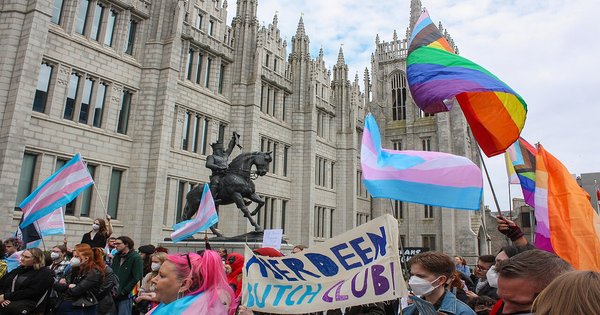
France likes to think of itself as a country where these questions were settled long ago. It legalized same-sex marriage and joint adoption in 2013, and it has worker protections covering both sexual orientation and gender identity. But in 2026, the terrain of the fight has shifted to trans people — and especially trans young people — where France looks less like a settled leader and more like a country pulled in two directions at once.
The bill on the table
The immediate flashpoint is a proposed law aimed at restricting the medical care available to minors questioning their gender. Modeled on the wave of “gender-critical” legislation moving through several European legislatures, it would tighten or curtail access to puberty blockers and hormone treatment for people under 18 — care that, in current French practice, follows a cautious, staged path: psycho-social support before puberty, puberty blockers available at the start of puberty, and hormones accessible from around age 16.
The scale of who this affects is often misunderstood. In 2022, fewer than 300 of the roughly 9,000 people granted long-term-condition status for transgender identity in France were under 18. Numbers have grown since — total beneficiaries reached about 22,550 in 2023 — but minors remain a small fraction of the whole. That hasn’t stopped trans youth healthcare from becoming a political lightning rod, with right-wing parties, led by the National Rally, pressing the case and framing restriction as caution.
France’s own rights watchdog pushes back
What makes the French debate distinctive is that the government’s own independent human-rights institution is on record pushing the other way. In June 2025, the Défenseur des droits (Defender of Rights) issued a detailed framework decision on the rights of transgender people that called for expanding access, not narrowing it: a simplified, declaration-based procedure for changing civil status, mandatory training for healthcare staff on transgender identity, and better enforcement of existing protections in private institutions.
The Defender of Rights has separately warned that legislation restricting care for trans minors would introduce discrimination against them in the healthcare system — a direct rebuke to the logic of the bill. When a country’s designated rights watchdog and a chunk of its legislature are arguing in opposite directions, “where France stands” becomes a genuinely open question rather than a settled fact.
The reform that hasn’t moved
There’s a second, quieter story running alongside the healthcare fight: legal gender recognition. Changing your first name in France is relatively straightforward and can be done at a town hall, free, at any age with the agreement of both legal representatives. Changing your gender marker is another matter — it still requires going through a court.
In its June 2025 framework, the Defender of Rights asked that the law be modified to explicitly open the gender-marker procedure to minors through a simple declarative process. As of mid-2026, no legislative text has followed. Left-wing parties have proposed making legal gender change a simple declaration at a town hall rather than a court matter, but that reform has not advanced either. The result is a status quo that trans advocates describe as one of their biggest remaining battles: name changes are easy, but the marker that appears on official documents stays locked behind a courtroom.
The bigger picture
None of this makes France an outlier in the harshest sense. It has not banned Pride, criminalized “propaganda,” or stripped away marriage rights — the kinds of rollbacks reshaping parts of Central and Eastern Europe. But it is a reminder that in Western Europe, the frontier of LGBTQ+ rights has moved to trans healthcare and legal recognition, and that even countries with strong headline records can stall or slide there.
For trans people in France, 2026 is a year of holding the line: defending the care that exists, resisting a bill that would restrict it, and waiting on a recognition reform that keeps being promised and keeps not arriving. The country that settled the marriage question more than a decade ago is discovering that the next question is harder — and far from resolved.
Sources: Défenseur des droits framework decision no. 2025-112 (June 2025); LGBTQ rights in France (Wikipedia).